
Diaspora Communities and the Future of Global Payments
How global communities are reshaping the way money moves across borders.
3/15/20262 min read
The Economic Power of Diaspora Communities
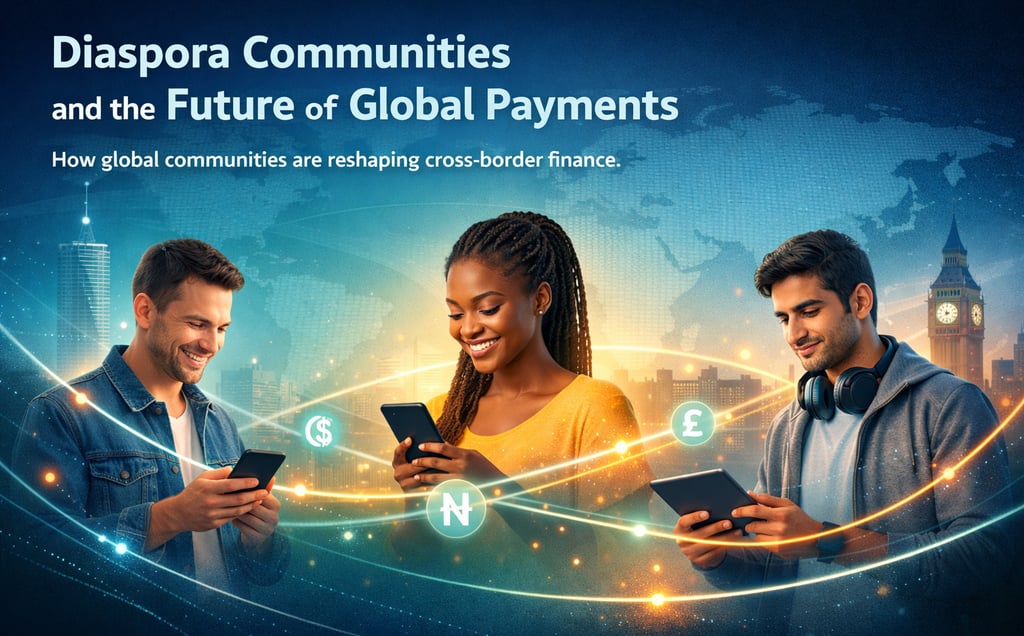
Every year, migrants send hundreds of billions of dollars to their home countries. These transfers—commonly known as remittances—support families, fund education, enable entrepreneurship, and strengthen local economies.
In many developing countries, remittances represent one of the largest sources of external financial inflows, often exceeding foreign direct investment or international aid.
Beyond financial contributions, diaspora communities also drive knowledge transfer, investment opportunities, and global partnerships.
Yet despite their importance, the systems used to move money across borders remain outdated.
The Challenges of Traditional Cross-Border Payments
Traditional international transfers often involve complex financial networks that were built decades ago.
As a result, users frequently face:
• High transfer fees
• Hidden exchange rate margins
• Limited transparency
• Slow settlement times
• Restricted access in certain regions
For individuals who regularly support family members or operate businesses across borders, these challenges can significantly reduce the value of the money being sent.
Fintech Innovation Is Transforming Global Payments
Financial technology is beginning to modernize how cross-border payments work.
Digital platforms are introducing new models designed to improve transparency, reduce unnecessary fees, and simplify international transactions.
Key innovations include:
• Mobile-first financial platforms
• Transparent pricing and exchange rates
• Secure peer-to-peer transactions
• Faster settlement mechanisms
• Improved financial access across regions
These innovations are particularly important for diaspora communities that require flexible and reliable payment options.
Peer-to-Peer Exchange and the Future of Currency Movement
One of the most promising developments in global payments is peer-to-peer currency exchange.
Rather than relying entirely on traditional intermediaries, peer-to-peer marketplaces allow individuals to exchange currencies directly with each other at mutually agreed rates.
When supported by secure mechanisms such as escrow systems and identity verification, this approach can provide:
• Greater transparency
• Increased efficiency
• More competitive exchange rates
For diaspora communities moving money across borders frequently, this model introduces a new level of flexibility and control.
The Next Phase of Global Payments
As global mobility continues to grow, the demand for efficient and transparent cross-border financial tools will only increase.
The future of international payments will likely be defined by systems that prioritize:
• Simplicity
• Transparency
• Accessibility
• Security
By aligning financial technology with the real-world needs of globally connected communities, the next generation of payment platforms can make cross-border transactions easier and more inclusive.
FastrPay is building a simpler way to send and exchange money across borders.
Our platform combines free remittances with a secure peer-to-peer exchange marketplace, designed to give users greater clarity and control over their cross-border transactions.
Be among the first to access FastrPay
Join our early access waitlist to:
• Receive launch updates
• Get early access to the platform
• Be part of the next generation of global payments
Follow us Socials
Contact
info@fastrxchange.com
+1-204-720-6151
© 2026. FastrXchange Technology Inc. All rights reserved.